


Buying Ammo by the Case: The Smart Way to Stock Up and Save Big
A shooter preparing for a weekend competition opens a single cardboard case to find fifty boxes of identical .223 Remington, each sealed and ready for distribution. Ammo by the case is simply the bulk purchase of ammunition in its original manufacturer shipping container, typically holding 500 to 1,000 rounds depending on caliber. This method centralizes storage, reduces per-round cost through volume pricing, and ensures a consistent lot number for uniform performance across all rounds. To use it, you break the case’s outer seal, remove individual boxes as needed, and reseal the container to protect the remaining rounds from moisture and temperature shifts.
What Exactly Does Buying a Full Case of Ammunition Get You?
Buying a full case of ammunition—typically 500 to 1,000 rounds for handgun calibers and 200 to 500 for rifle—gets you a bulk pricing discount that usually cuts per-round cost by 10–20% versus individual boxes. More critically, you secure consistent lot numbers, meaning every round shares identical powder charge, primer, and bullet seating, which is essential for maintaining zero and predictable ballistics at distance. You also eliminate the need for frequent restocking trips, as a case represents a substantial training block—enough for several dedicated range sessions without rationing. The ammo by the case purchase ensures you have a reserve for practice and defense, but remember that all ammunition degrades slowly, so store cases in a cool, dry place and rotate your stock annually to guarantee reliability when you need it most.
The Real Difference Between a Box and a Full Shipping Case
A standard box is retail packaging, often cardboard, holding a set count like 20 or 50 rounds for shelf display. A full shipping case is the bulk, master container that bundles multiple boxes together, typically 500 to 1,000 rounds, designed for palletizing and transport. The real difference is structural: shipping cases use thicker corrugated fiberboard and tighter packing to withstand stacking and vibration during freight, whereas a box protects only for short-term handling. This translates to lower per-round cost and reduced packaging waste, but also larger, heavier units that require dedicated storage space.
- Price per round drops due to less packaging labor per cartridge.
- Cases have reinforced seams and dividers, not just a flap top.
- Unpacking a case yields multiple sealed boxes, not loose ammo.
- You manage one SKU and one footprint versus many individual boxes.
Common Calibers and Case Sizes You’ll Actually Find in Stock
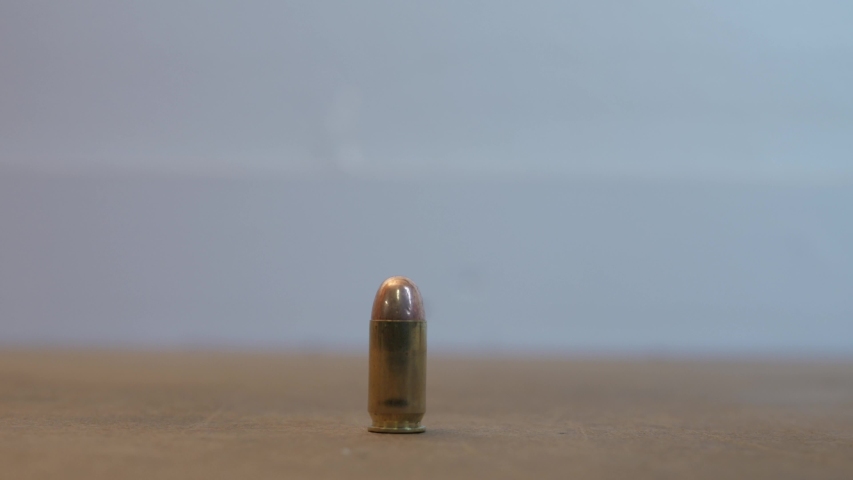
When buying ammo by the case, the most readily available calibers are 9mm Luger, 5.56 NATO, and .223 Remington, typically packed in 500 or 1,000-round cases; 9mm frequently ships as 50-round boxes in a 1,000-round outer case, while 5.56 often comes in 150-round “battle packs” or 20-round boxes within a 1,000-round wooden crate. For rifle shooters, .308 Win and 6.5 Creedmoor are commonly found in 200- or 500-round cases, usually as 20-round boxes. Pistol calibers like .45 ACP and .40 S&W appear in 500-round cases, while rimfire .22 LR is ubiquitous in 500- or 1,250-round brick-style cases. Case counts for popular calibers vary by manufacturer, so verify the per-box and per-case totals before ordering.
How Many Rounds Are in a Case, and Why That Number Matters
A standard case of ammunition typically holds 500, 1,000, or 2,000 rounds, depending on caliber and packaging—pistol calibers often ship in 500 or 1,000, while rimfire like .22 LR frequently comes in 500-round bricks or 1,250-round cases. That number matters because it dictates your cost-per-round breakpoint: a 1,000-round case usually drops the price per shot by 20–30% versus buying boxes of 50, making it the sweet spot for serious shooters. *A 2,000-round case matters less for the discount and more for the logistics of range trips, since it lets you skip resupply entirely.* The count also affects storage—a case of 1,000 9mm weighs roughly 28 pounds, so the number determines whether you can lift it into a safe or need a dedicated shelf.
Why that exact number matters is tied to your training cadence: if you shoot 200 rounds monthly, a 1,000-round case gives you five months of practice without rebuying, while 500 forces a reorder mid-year.
Q: What is the most common case count, and why does that number matter? 1,000 rounds—it matters because it aligns with bulk pricing tiers and typical monthly consumption, so you pay the lowest rate without committing to more than you can reasonably store in a non-climate-controlled closet.
Why Does Per-Round Cost Drop So Much When You Buy in Bulk?
Buying ammo by the case slashes 9×18 Makarov Ammo for Sale per-round cost primarily because you’re paying for bulk packaging efficiency, not the bullets themselves. Manufacturers and retailers spend far less on labor, handling, and individual boxes when they ship 500–1,000 rounds as one unit—those savings transfer directly to your wallet. Shipping weight is another huge factor: a flat-rate case fee spreads the freight cost across hundreds of rounds, whereas five separate boxes each carry their own markup and delivery surcharge. Retailers also price cases to move inventory fast, accepting thinner margins on larger transactions since the profit per order is still higher. The biggest single driver? You’re eliminating the “convenience tax” of small-box production and middleman repackaging, so the per-round price dives by 20–40% just by choosing one sealed case over ten shelf-picked boxes.
Breaking Down the Price Per Round: Case vs. Loose Boxes
The real savings with ammo by the case become obvious when you break down the price per round between a sealed case and loose boxes. A case, typically 500 or 1,000 rounds, is packed by the manufacturer as a single unit, so you skip the per-box markup that adds up when you buy individual 20- or 50-round boxes. Loose boxes at retail carry extra handling and shelf-space costs, which inflate each cartridge’s price. When you buy a case, you’re paying for the ammo itself, not the retail overhead. That’s why case pricing per round can drop by 10–20% compared to buying the same count as loose boxes .50 Cal Ammo for Sale separately. Even if you don’t shoot a case quickly, the per-round math favors the bulk purchase every time.
Where the Hidden Savings Come From (Shipping, Packaging, and Handling)

Buying ammo by the case shifts cost burdens away from per-box logistics. A single case-sized parcel replaces multiple small shipments, which directly cuts carrier fees, fuel surcharges, and dimensional-weight penalties. Packaging materials drop because one sturdy outer box uses less cardboard and filler than several individual cartons. Handling labor also compresses: warehouse staff pick, label, and load one SKU instead of repeating the process per box, reducing error checks and rework. These hidden volume discounts in bulk ammo logistics often account for 5–10% of total savings, separate from the ammunition’s base price. The consolidation effect is the core lever—fewer touches and lighter aggregate weight per round translate to measurable cost-per-carton reduction.
Q: Where do the biggest hidden savings come from in case purchases?
A: Shipping weight brackets and handling steps. One case avoids multiple minimum-order fees and halves the per-round packaging mass, so you pay for fewer cubic inches and less labor-minute overhead.
How Bulk Buying Lets You Afford Higher-Grade Ammo for the Same Budget
When you buy ammunition by the case, the dramatic per-round reduction directly upgrades your purchasing power. Instead of settling for budget-friendly practice loads, the savings from bulk pricing let you allocate the same total expenditure toward premium defensive ammunition. For instance, a 500-round case of standard brass-cased rounds might cost what 250 rounds of high-end bonded hollow points would at retail. The bulk discount effectively closes the price gap, allowing you to train with consistent, higher-grade components—better primers, casings, and propellant—without increasing your shootout. This shifts your entire inventory Ammunition for Sale to a superior tier, meaning every round you fire, whether at the range or for carry, meets a higher reliability standard. The quantity discount acts as a financial bridge, not just a cost-cutter.

Bulk case purchases compress the price gap, letting you redirect saved funds into premium-grade ammunition for the same overall budget.
How to Choose the Right Case for Your Specific Gun and Shooting Habits
Choosing the right case of ammo starts with matching the box to your firearm’s chambering and your actual round count, not just the deal on the shelf. If you run a high-volume semi-auto for competition, prioritize bulk-packed cases with consistent, reloadable brass—saving per-round cost matters more than premium groupings. For a precision bolt gun, select a case from a lot number with tight tolerances, even if it costs more, because your habit is benchrest accuracy. Your shooting cadence dictates case size—a weekend plinker needs 500 rounds, while a training-heavy pistol shooter should buy 1,000 or more to avoid constant reordering. Also, check the primer type and bullet weight against your gun’s twist rate to ensure reliable cycling and zero. A case that feeds flawlessly in your buddy’s rifle might still jam your short-stroke gas system. Finally, if you store ammo long-term, pick a sealed, waterproof case—but if you burn through it monthly, a simple cardboard-and-foam tray is plenty.
Matching Bullet Grain and Load Data to Your Firearm’s Barrel Twist
Your barrel’s twist rate dictates which bullet grain stabilizes best, so matching grain to twist is the first step before buying a case. A 1:7 twist handles heavy 77-grain loads, while a 1:12 twist prefers lighter 55-grain rounds for tight groups. Always cross-reference load data with your twist rate, because a mismatched combo causes keyholing or poor accuracy. For ammo by the case, test one box of each candidate grain at your range, then commit to a full case only for the load that prints consistently. Check your barrel’s spec—a stability calculator helps, but real grouping beats theory.
Selecting Between Full Metal Jacket, Hollow Point, or Match-Grade in Bulk
When buying ammunition by the case, your bullet choice should mirror your primary purpose, not just your firearm. Bulk FMJ (Full Metal Jacket) is your economical workhorse for high-volume range sessions, offering reliable feeding and minimal barrel fouling, but its penetration-focused performance is unsuitable for defensive scenarios. Hollow points, by contrast, demand a deeper investment because their expanding terminal performance is critical for self-defense; stocking a whole case of premium JHPs ensures you can practice with the exact recoil impulse and point-of-impact you’ll rely on under stress. Choosing match-grade in bulk is only prudent if you routinely shoot beyond 100 yards, where its superior concentricity and consistent weight distribution translate into tangible accuracy gains over standard FMJ. For bulk buying, avoid mixing these types—commit to one profile to simplify inventory and maintain consistent zero.
For bulk purchases, pick FMJ for practice volume, hollow points for defensive carry, and match-grade only for precision distance work—never blend them in one case.
Should You Stockpile a Single Lot Number or Mix Different Production Runs?
For defensive ammunition, stockpiling a single lot number ensures identical ballistic performance, point of impact, and pressure curves, which is critical for zeroing your optic and trusting your sight picture during a malfunction. Mixed production runs introduce slight variations in powder charge and bullet seating depth, potentially shifting your point of impact by an inch at typical self-defense distances. However, for high-volume practice ammunition, mixing lots is beneficial because it mirrors real-world ammunition availability and exposes you to subtle cycling differences, ensuring 9mm Ammo for Sale your firearm functions reliably across various manufacturing tolerances. If you choose a single lot, buy enough for both zeroing and defensive use, then rotate it out periodically. Alternatively, track each lot separately during range sessions to identify any accuracy discrepancies before relying on them. Your choice depends on whether consistency or adaptability matters more for your specific shooting application.
Practical Storage and Handling Tips for a Full Ammo Case
When handling a full ammo case, always support the bottom and lift with your legs, as the concentrated weight can exceed 60 pounds and strain joints. Store the sealed case on a sturdy, level pallet or reinforced shelving, never directly on concrete, to prevent moisture wicking through the cardboard or polymer container. Rotate stock by placing newly purchased cases behind older ones, using a permanent marker to note the purchase month on the exterior. To avoid primer shift or bullet setback, never drop or jar a full case; instead, slide it gently into position. For long-term storage, open the case every six months to inspect for corrosion and to redistribute the weight inside, preventing bullets from settling against the case walls. Keep the lid sealed whenever possible to maintain a stable internal climate.
Best Ways to Organize a Case So You Don’t Break the Seal Before You Need It
To preserve a factory-sealed case until deployment, designate a dedicated, clearly 9.3x62mm Mauser Ammo for Sale labeled storage zone separate from your working ammunition. Stack cases flat to prevent seal stress, and avoid placing heavy objects atop them, which can compromise the adhesive. Rotate your inventory by date, positioning the oldest case on top for first use. Never break the seal for a quick handful; instead, maintain a separate, smaller open box for immediate range trips. If you must inspect a case, do so visually without opening the outer carton, and reseal any accidental tear with quality tape. This method ensures your bulk reserve remains untouched, intact, and ready for long-term storage.
How to Rotate Your Stockpile to Keep Older Rounds Fresh
To keep older rounds fresh when buying ammo by the case, implement a strict first-in, first-out (FIFO) rotation system. Physically mark each case with the purchase date using a permanent marker, then stack new cases behind older ones on your shelf. When you head to the range, pull from the front—the oldest case—and shoot those rounds first, preserving newer stock for long-term storage. Every six months, inspect the primer and case for corrosion or green patina on brass; if found, move those rounds to the top of your shooting queue immediately. This habit prevents age-related moisture damage from becoming a safety or reliability issue.Rotating your stockpile by FIFO is the single most effective method to keep older rounds fresh without opening sealed factory packaging.
Question: How often should I rotate my stockpile to keep older rounds fresh?
Check your storage log monthly, but physically rotate cases at least quarterly—mark the oldest case 7mm Rem Mag Ammo for Sale with a bright sticker and always grab it first for your next practice session.
Using Ammo Cans and Desiccants to Extend Shelf Life Inside the Original Case

Keeping your bulk purchase inside its factory box is convenient, but the cardboard won’t stop humidity. Slip the sealed inner bags into a sturdy ammo can for bulk case storage to create a vapor barrier. Toss in a few silica gel desiccant packs—they quietly absorb moisture that causes corroded primers and tarnished brass. Check the desiccant color every few months; if it’s saturated, bake it dry and reuse. This combo keeps your rounds shooting reliably for years, even if the original case sits in a damp garage or basement.
Pair the original case with an ammo can and rechargeable desiccants to lock out moisture and preserve your full-case purchase indefinitely.
Common Mistakes to Avoid When You Buy a Whole Case at Once
Buying ammo by the case saves money, but only if you avoid key errors. First, never assume every case is sealed from the factory; inspect the box for tape or damage, as repacked lots can mix headstamps and bullet weights, ruining consistency. Second, don’t ignore lot numbers—if you buy two cases of the same cartridge, ensure they share a lot to avoid point-of-impact shifts. Third, skipping a quick caliber and grain-weight verification on a random box inside the case is a common mistake to 7mm Rem Ultra Mag Ammo for Sale avoid; mislabeled outer packaging happens. Finally, don’t store the entire case in a damp garage or hot trunk without silica gel, since factory packaging isn’t always vapor-proof, leading to corroded primers across your whole purchase.
What to Check on the Box Before You Accept Delivery
Before your driver rolls away, make inspecting the case your non-negotiable ritual. Check for **visible box damage**—tears, dents, or crush marks signal rough handling that could misalign rounds or split primers. Shake the case gently; a uniform, solid thud means the inner trays are intact, while shifting or rattling indicates broken separators. Verify the factory seal (if present) hasn’t been tampered with—a peeled or resealed sticker is a red flag. Finally, glance at the lot number and caliber markings on the outer carton to confirm they match your order slip, then open one flap to 6mm Remington Ammo for Sale spot-check that the inner boxes are all the same brand and bullet weight.
Q: What is the most important thing to check on the box before you accept delivery?
A: The outer box’s structural integrity—rips, crushing, or a broken seal—because internal 9.3x72R Ammo for Sale spilling or moisture exposure from a compromised case can ruin the entire batch, costing you both ammo and time.
Why You Should Always Test-Fire a Sample From the Case Before Committing to a Long-Term Stockpile
Before you seal a full case into your rotation, pull a few boxes from the same lot and run them through your actual firearm. specialty sports and supply A batch can look perfect on the outside yet exhibit pressure signs, inconsistent velocities, or failure to extract that only show up after fifty rounds. If you discover a lot-specific feed or ignition issue after committing to 1,000 rounds, you are stuck with expensive, unusable inventory. Test-fire across different magazines and temperatures to confirm the primer strike is reliable and the bullet seats correctly in your chamber. This single step verifies the ammo performs to your defensive or competition standard, protecting your investment and your safety.
Always test-fire a representative sample from the exact case lot first; a few minutes at the range prevents a costly, potentially dangerous stockpile that your firearm may not run reliably.
How to Handle Squibs, Misfires, or Damaged Rounds Without Wasting the Whole Lot
When a case-lot round fails, resist the urge to trash the entire box. Set aside squibs, misfires, and visibly damaged cartridges in a labeled “reject” container; this isolates the problem without condemning the 500 or 1,000 rounds still in good shape. For misfires, try chambering the same round once more—a light primer strike often fires on a second attempt. Squibs demand immediate action: stop shooting, clear the barrel, and mark that round for disassembly or disposal. Damaged rounds, like dented cases or loose bullets, should be pulled apart for components rather than discarded wholesale. By segregating and treating each defect individually, you preserve the bulk of your investment and keep your range session productive.
Handle each faulty round individually—isolate, retry, or disassemble—so one bad cartridge never wastes your entire case lot.

Comments are closed, but trackbacks and pingbacks are open.